

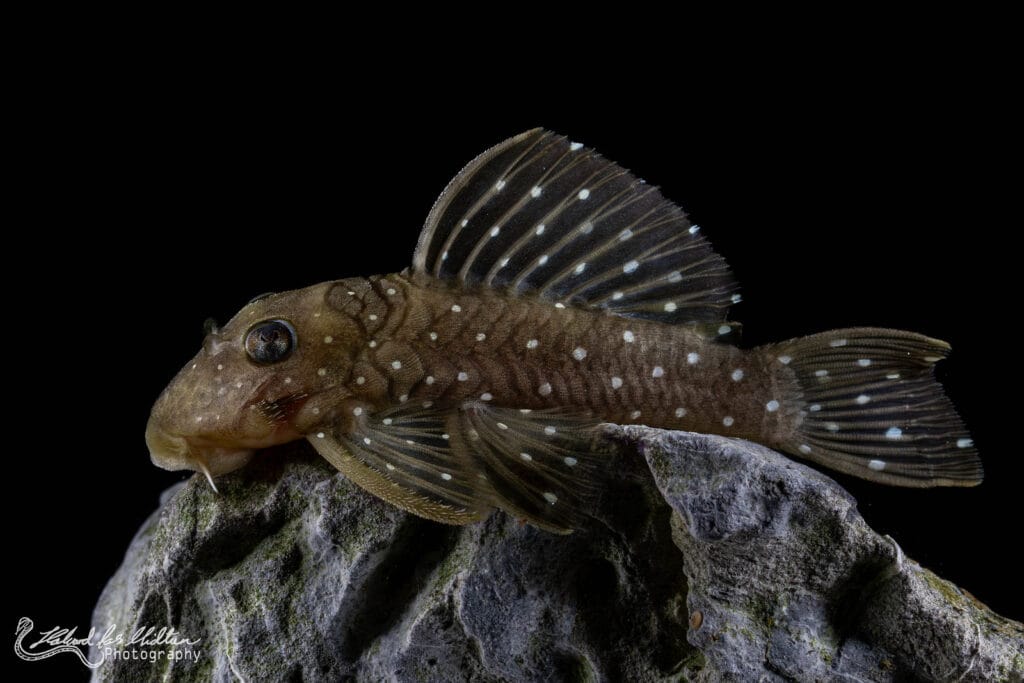
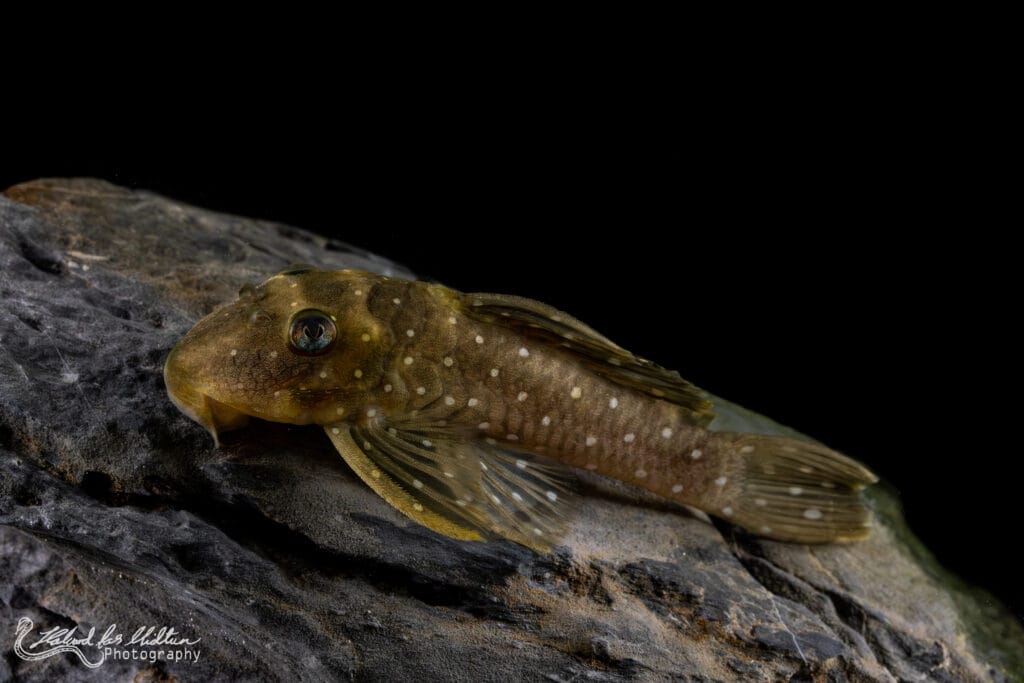
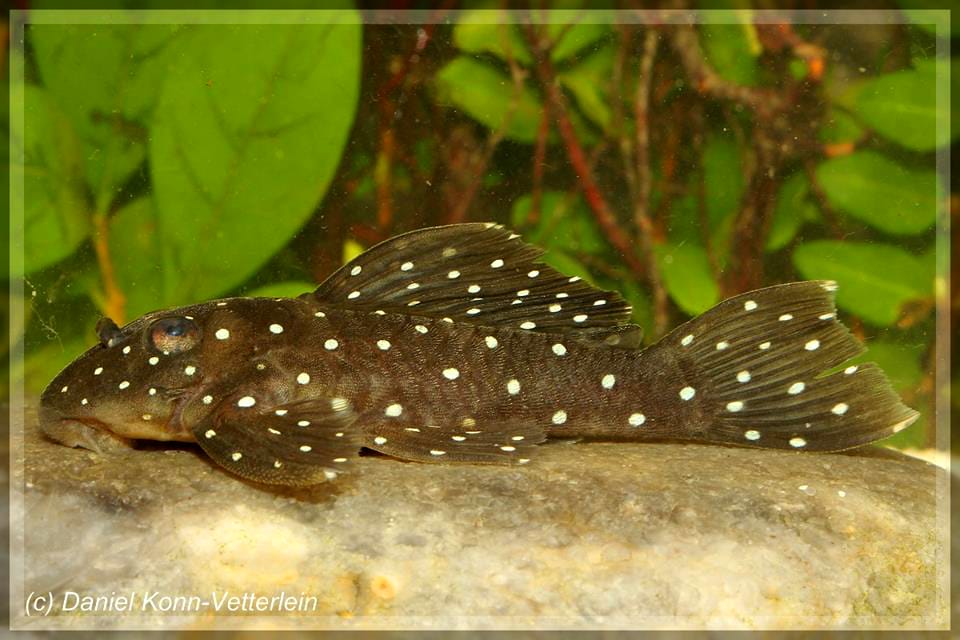
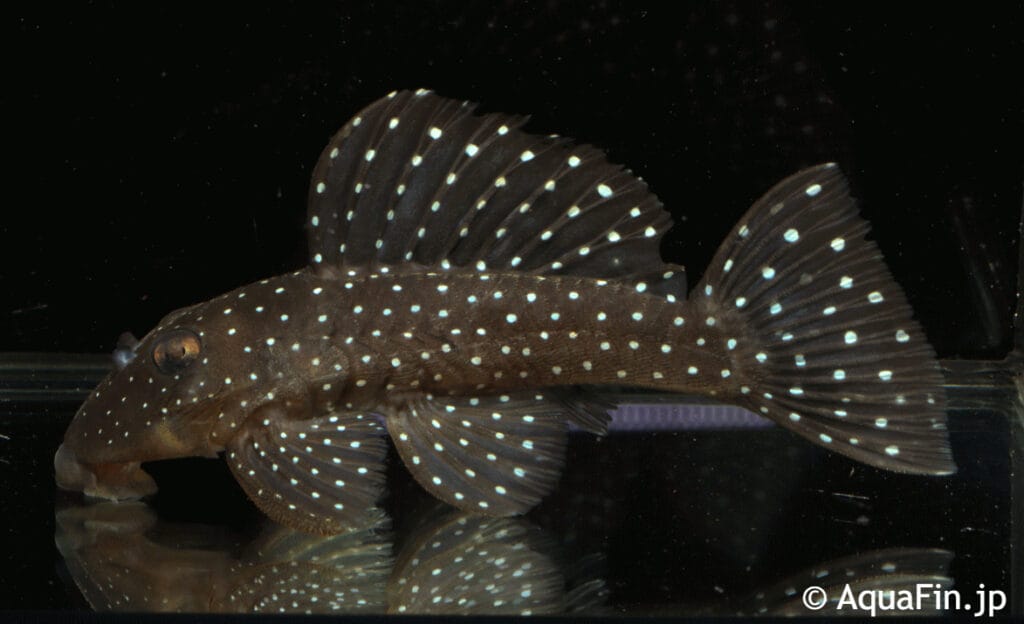
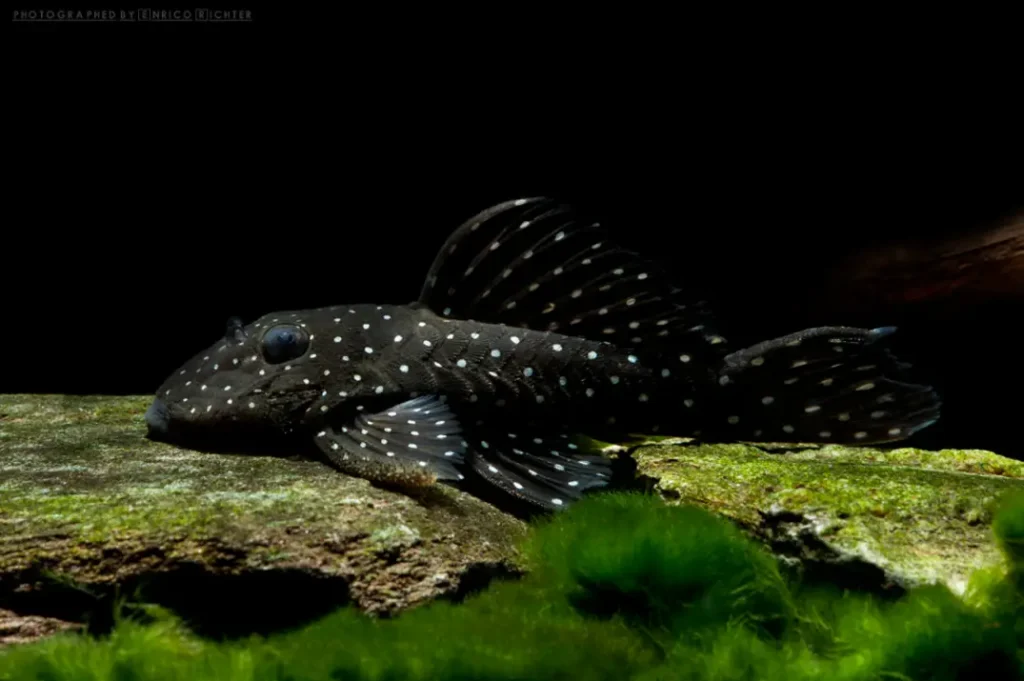
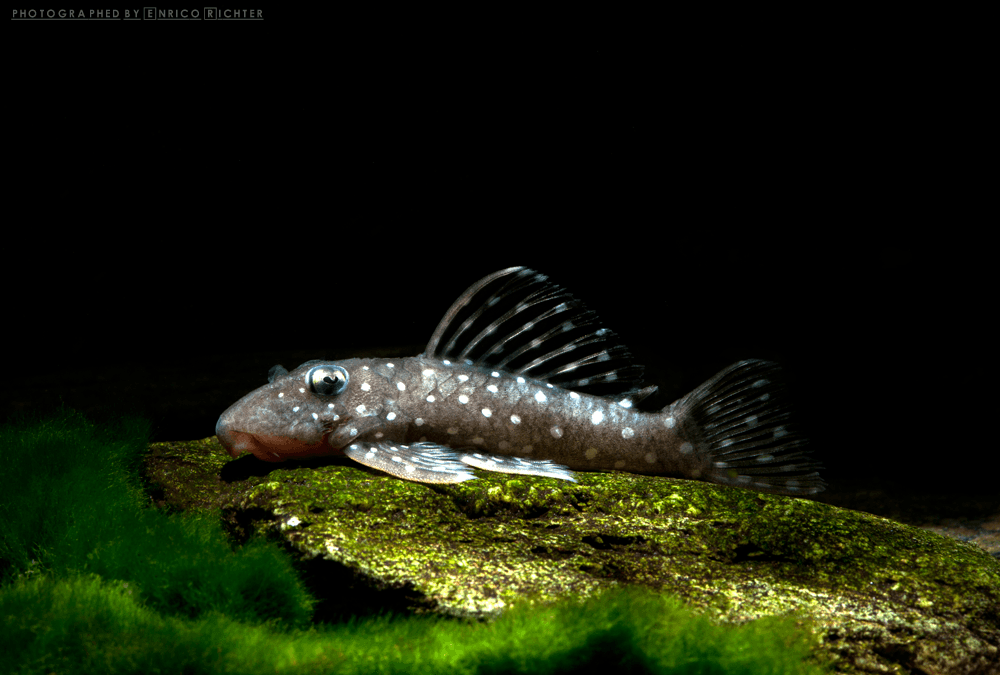
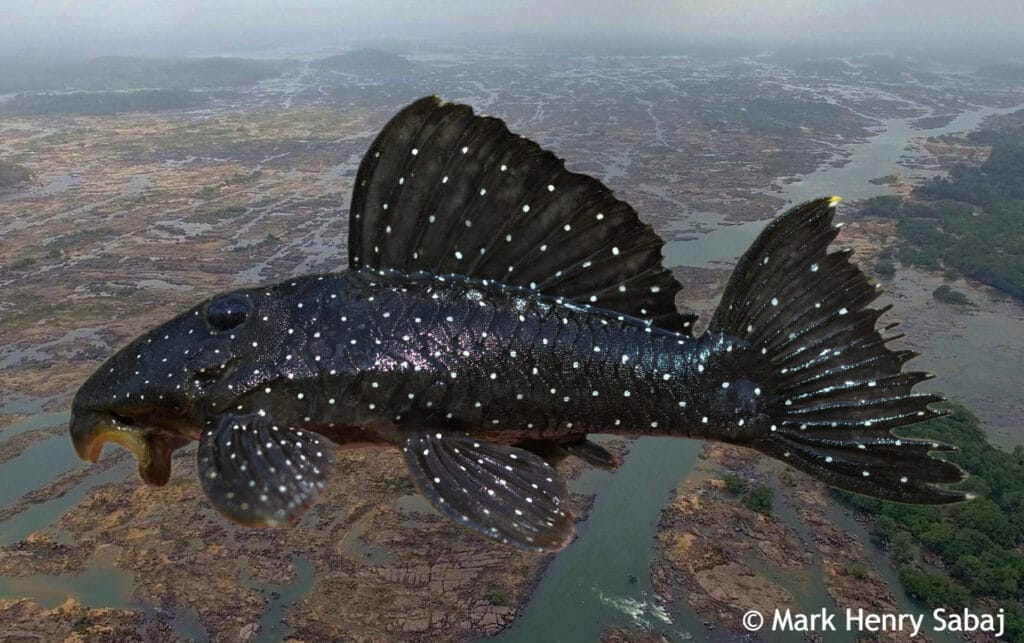
Oligancistrus to some, Spectracanthicus punctatissimus is a somewhat overlooked species of Loricariidae, which is a bit hard to understand. Maybe it can’t show off the same striking patterns as some Hypancistrus or Peckoltia species, but it’s still a great looking fish! Also, they don’t grow very large, and when well-conditioned they are quite easy to maintain. Among the more regular encounters in the hobby from this species is the form L30 from Rio Xingu, Brazil. The rather wide distribution of this species in the Xingu-system means the damming of the river doesn’t threaten its existence, and wild exports are frequent and common. Captive breedings are rare, which is probably due to the rather low commercial value of this fish and the easy access to wild collected stock.
Facts:
Name: Spectracanthicus punctatissimus (Steindachner, 1881)
Trade names: L30
Origin: Rio Xingu, Brazil
Maximum size: 15 cm / 6”
These fairly small Plecos are found in rock crevices in the rapids of Rio Xingu. They need an aquarium set up consisting of lots of hiding places in the form of rocks, wood and of course specially made caves that suit their measurements. In these the males will eventually guard their offspring. They prefer water that is warm (27-30 C), soft and slightly acidic. Most of all it should be well oxygenated and clean, so a good filtration system and frequent water changes are essential. It’s a slightly timid and withdrawn species that doesn’t really compete too well for food and territories, so it shouldn’t be placed in a tank with much competition for resources. Among themselves they are peaceful, although males may quarrel for caves and territories. Spectracanthicus species are omnivore and should be fed a varied diet. They seem to prefer high quality dry foods, crustaceans and insect larvae.
L30 is one of several, hard to distinguish, white spotted Spectracanthicus forms from the Xingu system. It’s unclear whether they all belong to the species S.punctatissimus or not. L30 can be told apart from L16 and L353 by its lower dorsal fin and smaller caudal fin. L417 looks extremely similar to L30 but has bigger eyes and a slenderer body. Spectracanthicus sp. “lower Xingu” is another similar form, but this lacks spots on the head. The form L254 has larger and fewer spots, and a pointier head. This head shape is also known in the form L315. Some aquarists consider L254 and L315 to be true Spectracanthicus and consider S.punctatissimus and the various forms of it to actually belong in the genus Oligancistrus. Most literature from the past cites them as this. As if these representatives from the same genus weren’t enough, L30 is also often confused with Parancistrus nudiventris (L31), another spotted Rio Xingu Pleco.
More info: