
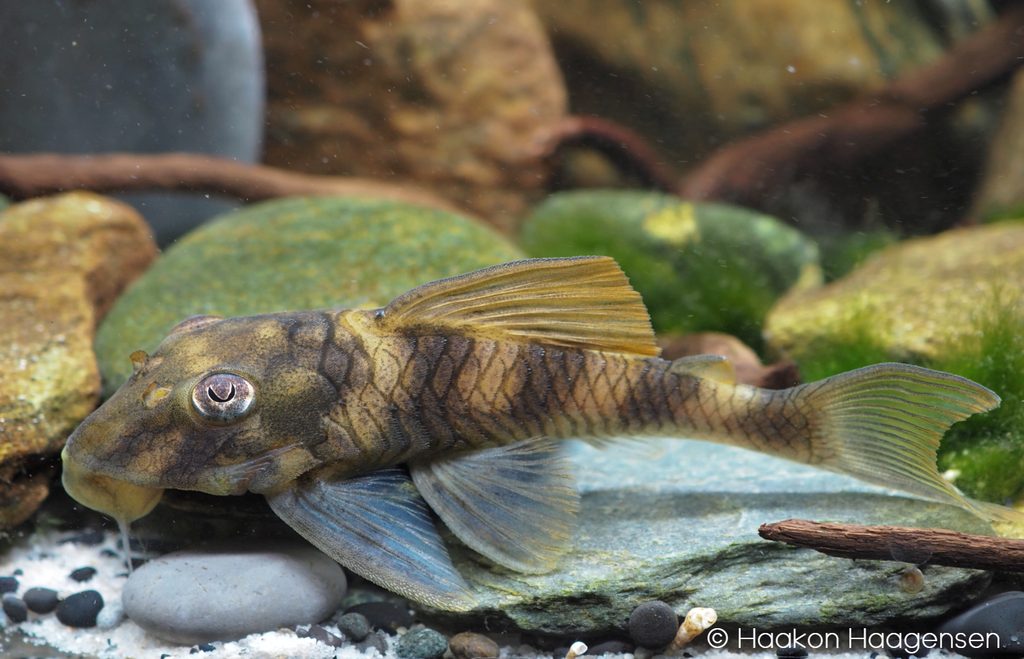

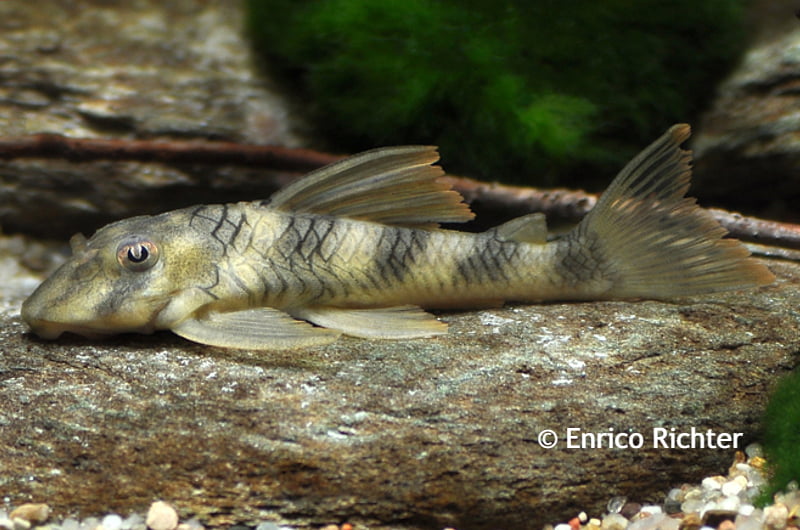
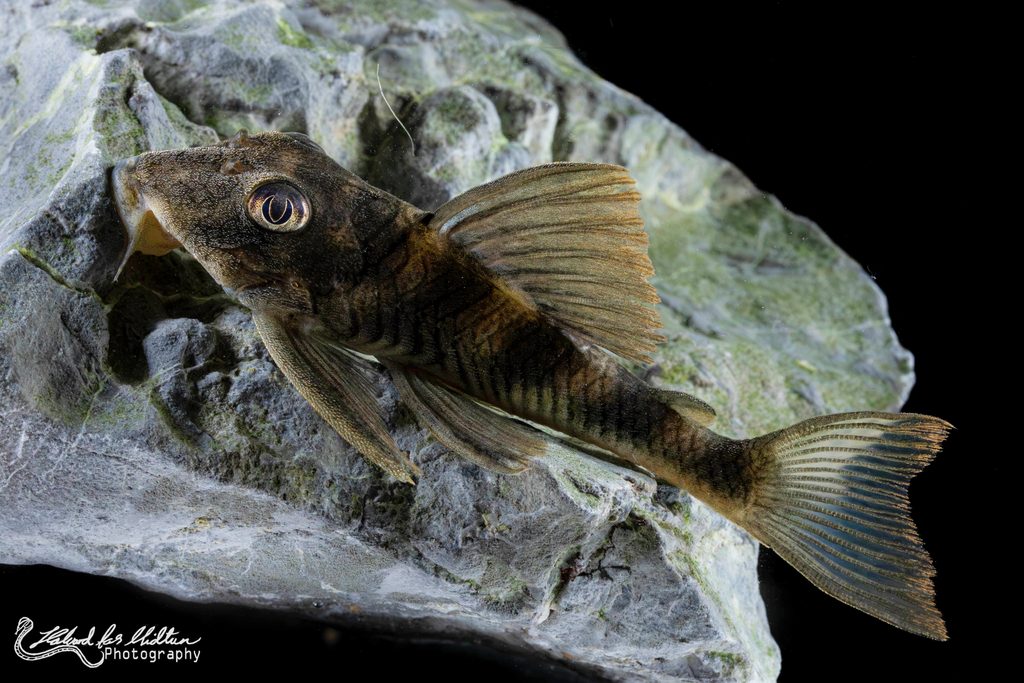
L265 has always been an oddity and a rare encounter in our hobby since it was first introduced in 1998. However, it’s an interesting and very easy to care for species, which is less shy than many other Loricariidae species. After settling in and when properly cared for, it will show a very nice bronze-coloured body contrasted by a black network pattern. The fins have an orange edge, but not as striking as with i.e. Peckoltia sp. L76.
Facts:
Name: Peckoltia sp.
Trade name: L265, LDA84, Tapajos Ghost Pleco
Origin: Rio Tapajos, Brazil
Maximum TL: 15 cm / 6”
L265 is likely to belong to a different genus than Peckoltia, perhaps Ancistomus or perhaps an entirely new genus. The genders can be told apart by typical anatomical features (broader head in males, broader belly in females), but also by the deeper, more intense colour of dominant males. Unlike what is typical for Peckoltia species, the males lack the odontodal growth on the back of their bodies and on their caudal fin. This corresponds more to Ancistomus. Males of L265 show stronger odontodal growth by the gills and on the pectoral fins than females. The species is an omnivore, and should be fed a varied diet. Upon import they may appear less colourful and thus less appealing, but given time they will show stronger colours. Even though we can expect L265 to breed in typical L-number fashion, no breeding reports have been published so far.
More info: