
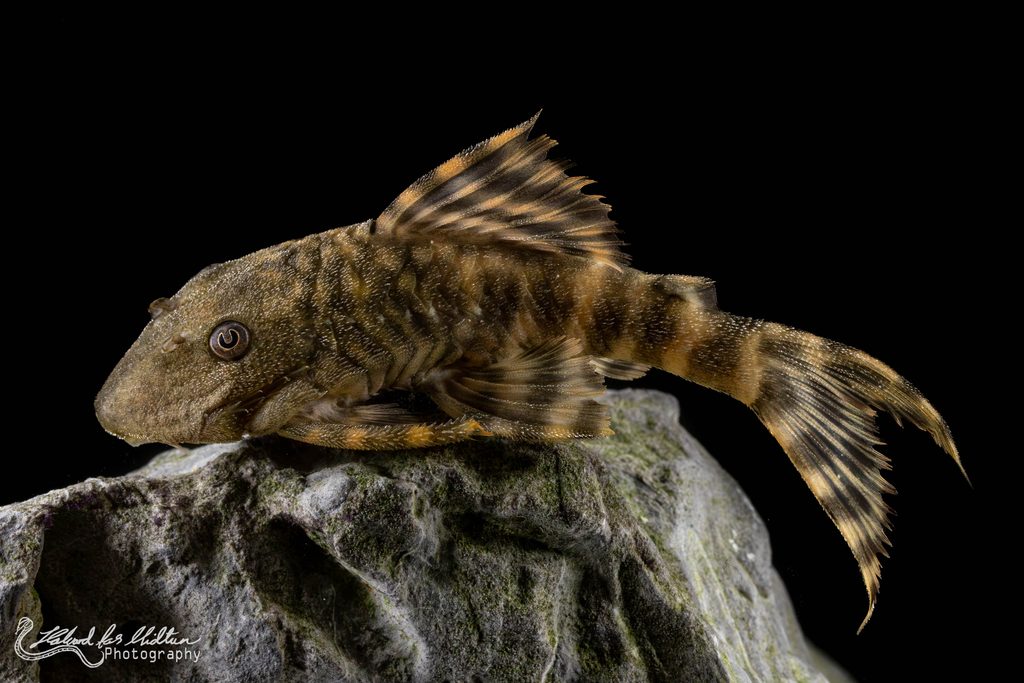
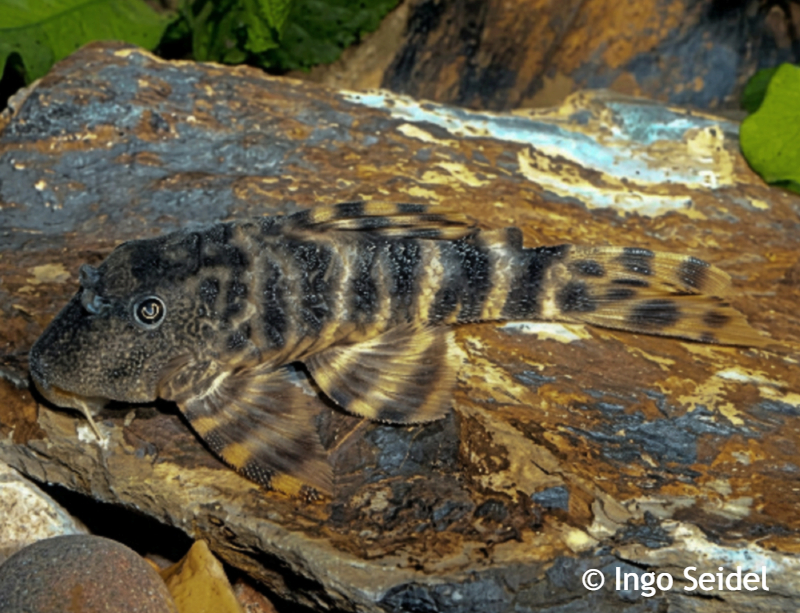
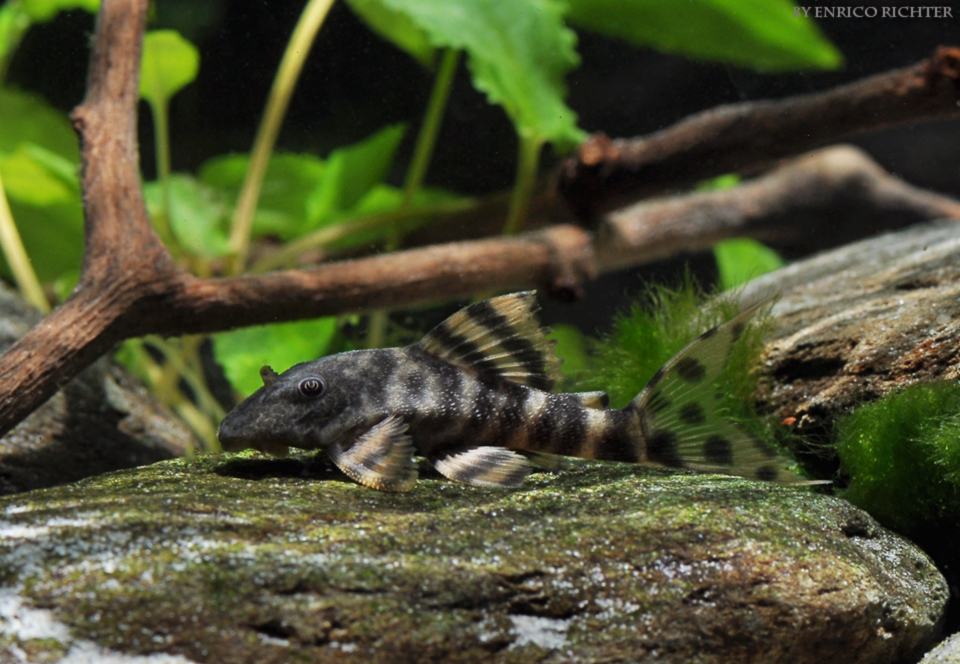
This is one of several Panaqolus species known from the upper Amazon in Peru, but not one of the more common ones in our hobby. This is a bit peculiar, as it shares habitat with the well-known and very frquently traded Panaqolus albivermis (L204), and is by far more common in the river than its more famous cousin! L206 can be recognized by its spotted pattern in the caudal fin, otherwise it closely resembles Panaqolus changae (L226), another peruvian representative of the genus. L206 is however said to be a smaller species than P.changae. The spotted caudal pattern is quite unusual among Panaqolus types, most forms show a striped pattern in the fins.
Facts:
Name: Panaqolus sp.
Trade names: L206, LDA26, Pucallpa Clown Pleco
Origin: Rio Ucayali, Rio San Alejandro, Peru.
Maximum size: 10 cm / 4”
Panaqolus species are great aquarium fish. They need shelter in the form of wood and rocks, and if they feel safe, they will venture out in search of food even during daytime. They prefer a vegetarian diet, and of course wood is essential for their digestion. Some crustaceans and insect larvae can be added, but a diet consisting of too much protein and too little vegetarian food can cause trouble for their digestion. They are peaceful Plecos, but males can be quarrelsome over territories and food. Panaqolus species are slightly more challenging to breed than many other popular Plecos, but it’s usually all a matter of time and patience. When they do, they breed in typical Loricariidae manner with the male guarding the brood in his cave. Usually, male Panaqolus develop quite impressive odontodal growth on their flanks and on their fins. L206 is a species best kept in warm (26-30 C), soft water.
More info: