

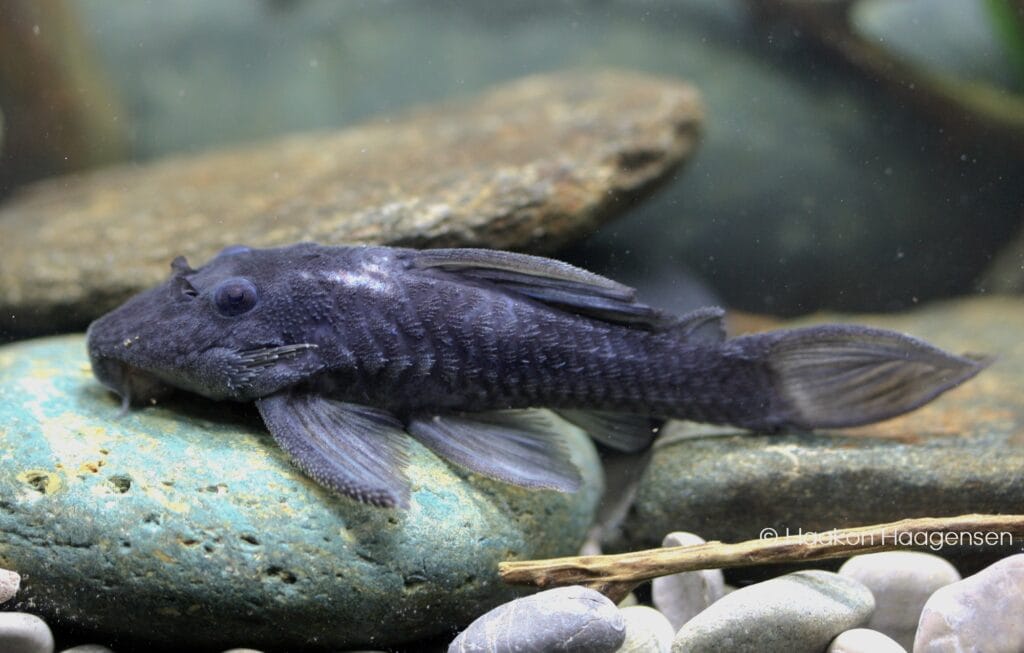
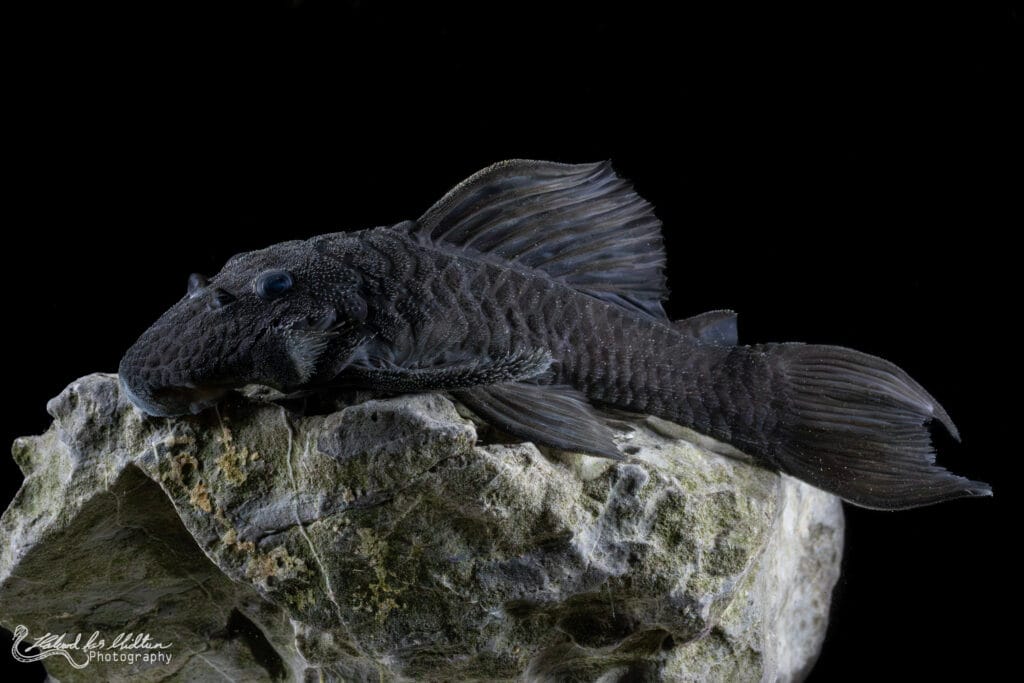
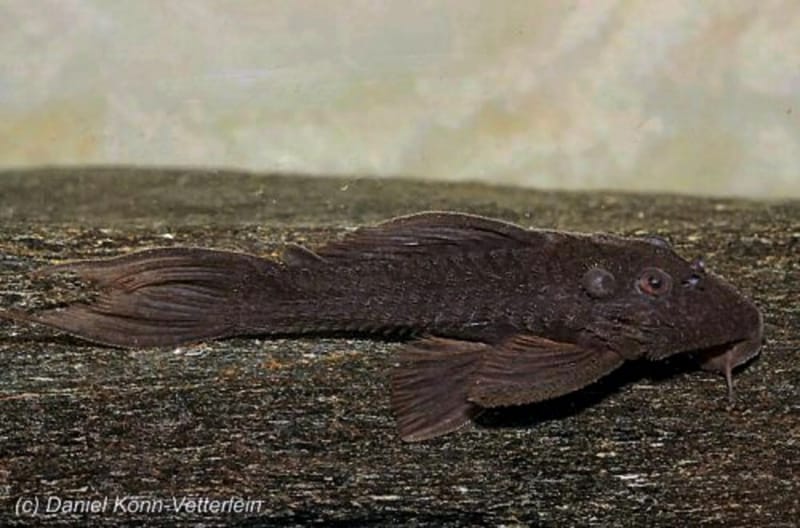
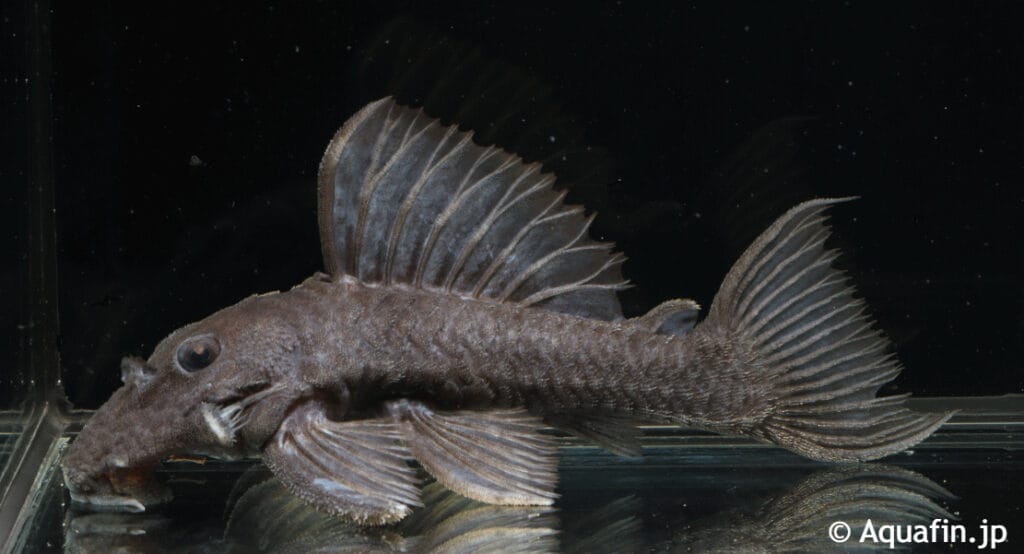
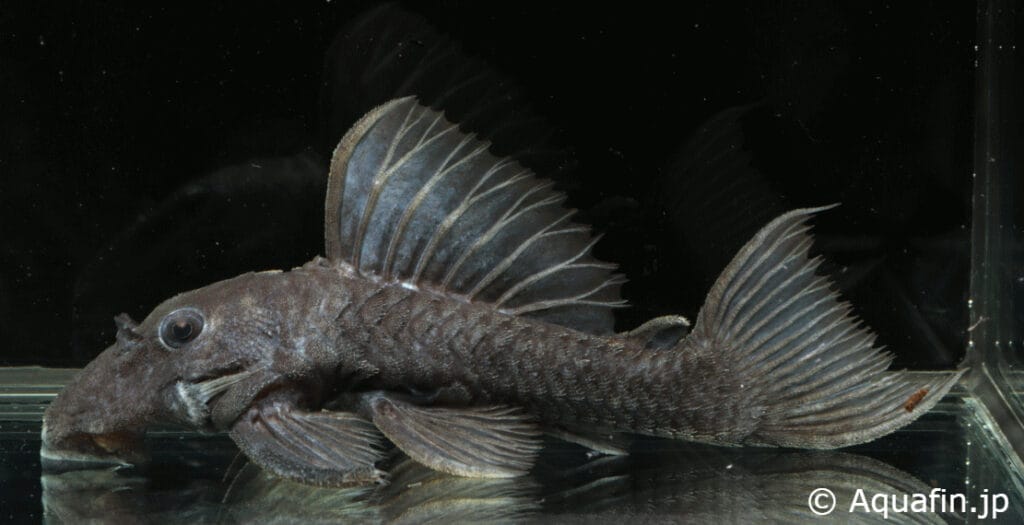
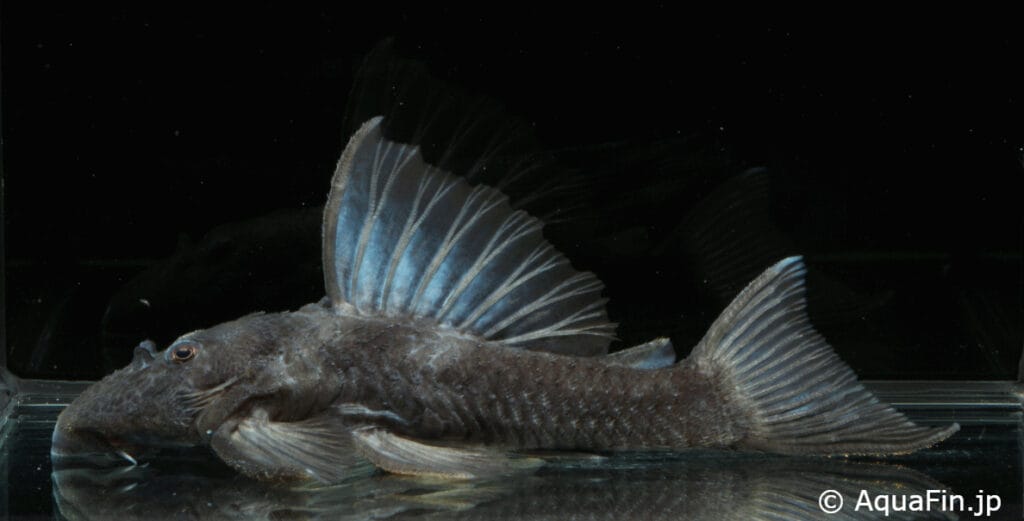
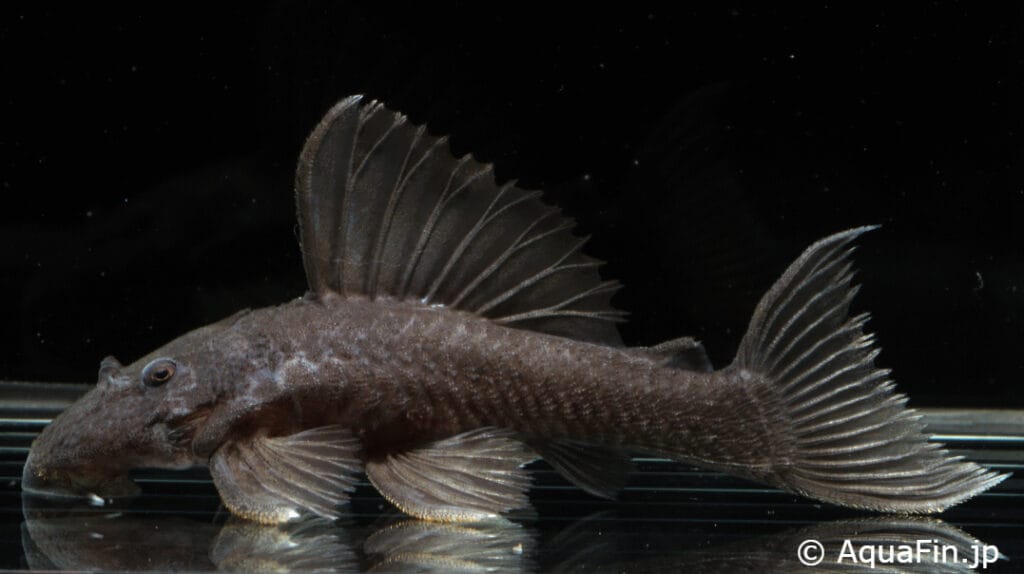
Not all L-numbers are covered in striking patterns and colours. This does however not make them any less interesting, and for some enthusiasts the uniform, dark appearance of the so-called “Pineapple Plecos” L197 and L269 makes them even more appealing than the more commercially available species. With their almost ancient-looking exterior, combined with their rareness, these Plecos are held in very high regard among a small group of fishkeepers. L269 is allowed for export, but if it ever shows up in the trade it’s only in very limited numbers. In contrast to L197, L269 does not appear to have a wide distribution, and is only known from Rio Tapajos in Brazil. Since it entered the scene in 1998 it has only occurred very sporadically in the hobby. It has rarely been bred in captivity, so there is no established, tank-bred stock of L269 available, and with its modest looks this is not likely to ever change. It will probably remain a very sought-after collectors-item for a few dedicated aquarists. It’s sometimes mistaken for being Hypancistrus sp.L70, known as Zombie Pleco, from the same river. Sometimes L269 is what hides behind the “Zombie Pleco” moniker from traders of such fish from Brazil. L269 can also show up as by-catch with Spectracanthicus murinus, another dark grey Tapajos Pleco. Compared to L197, L269 is a darker fish. They may turn out to be varieties of the same species.
Facts:
Name: Spectracanthicus immaculatus (Chamon & Rapp Py-Daniel, 2014)
Trade names: Pineapple Pleco, Ananas Pleco, L269
Origin: Rio Tapajos, Brazil.
Maximum size: 15 cm / 6”
These fish must be kept in well filtered and clean aquariums with lots of hiding places. They are peaceful towards other fish, but the males can be territorial and aggressive towards each other. L197 is an omnivore, and should be fed a varied diet consisting of crustaceans, shrimps, fish meat, Spirulina tablets and quality dry foods. Although few breeding reports exist, they breed in typical Loricariidae fashion under the right circumstances. Males can be recognized by their heavy odontodal growth and broader head, whereas ripe females will show off a fuller belly, especially when viewed from above.
L269 has been scientifically described as Spectracanthicus immaculatus. This classification is debateable, as there are numerous traits separating both L269 and L197 from the genus Spectracanthicus.
More info: